 BUSINESS

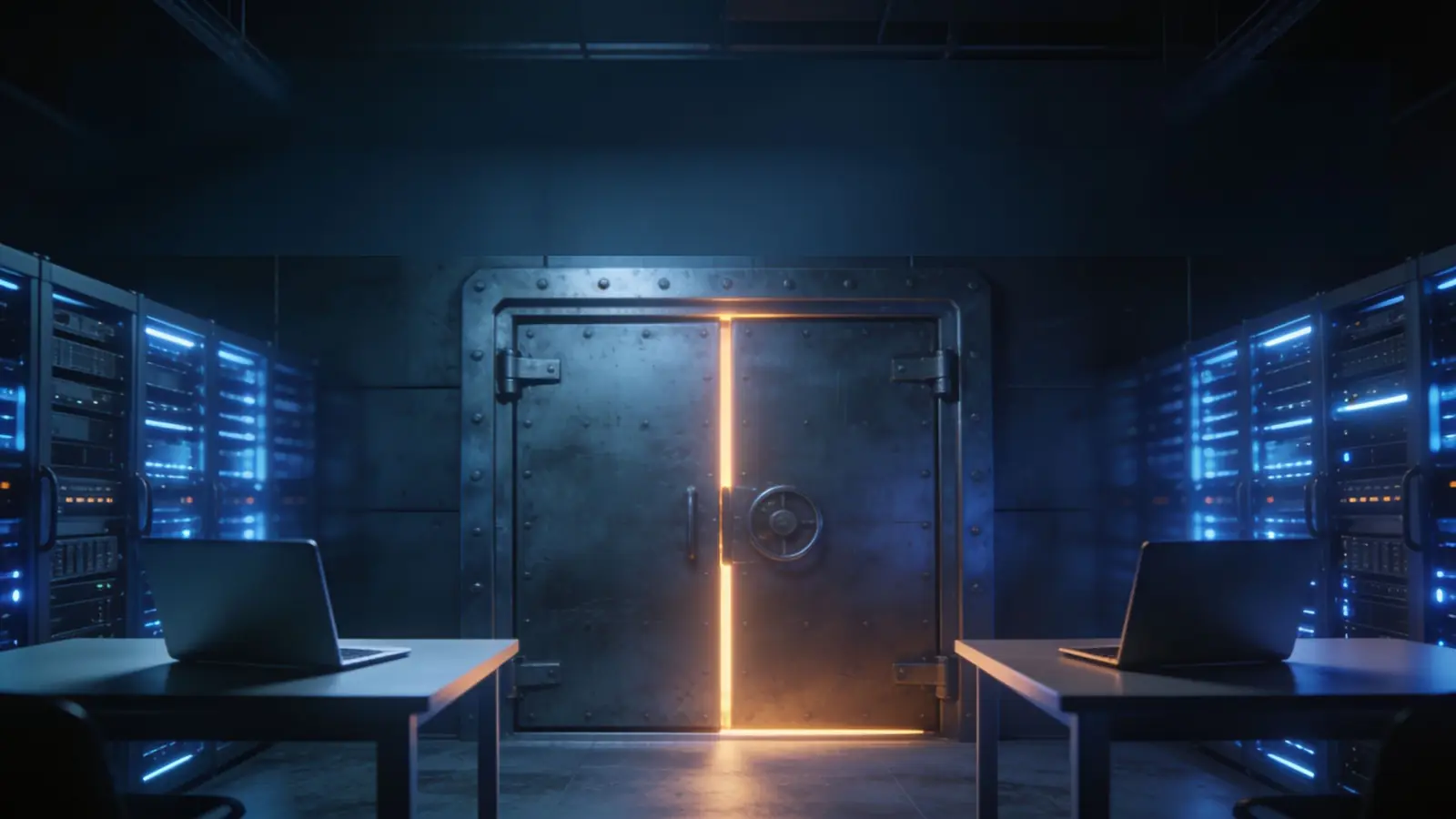
Many employees at Anthropic and OpenAI consider their companies' unreleased frontier models too powerful to release safely, according to an Axios report. Axios cites more than two dozen insiders, The Decoder reported, and internal discussions cover a release pause or even a halt to training.
Key facts
- Axios reported on 24 November, citing more than two dozen insiders, that many Anthropic and OpenAI employees think unreleased models can no longer be controlled safely.
- According to The Decoder, a release pause or even a training halt is being discussed internally, while distrust of leadership grows.
- Anthropic (23 November, 70 pages) and OpenAI (30 pages) published papers on VP ≠ VNP; heise says independent expert confirmation is still pending.
Researched and written with AI, to Luigi's brief, positions and editorial rules. Automatically checked against the sources. How I work →
The Axios report, published on 24 November, says concern is growing at both companies that internal models could slip out of human control. Distrust of senior leadership is rising at the same time, The Decoder summarised. The details here come from that summary; we have not reviewed the original Axios text.
What is documented is a mood among staff, not a decision by either company. The report does not say whether or when any model will be held back.
Unreleased AI models: what is public so far
Two mathematics papers from recent days offer a glimpse of what internal systems can do. According to heise online, Anthropic published a 70-page paper on 23 November whose proof of Valiant's conjecture (VP ≠ VNP) came from an internal Claude research model. A few hours later OpenAI followed with a 30-page paper; by its own publication history, it reached the result on 6 November.
Both firms released formalisations in Lean, a tool for machine-checking proofs. Independent expert confirmation is still pending, heise wrote. Last week Anthropic mathematician Levent Alpöge used Claude to produce a formal proof of the Riemann hypothesis, which the Lean FRO and the Mathlib Initiative confirmed as logically valid.
Neither source says how these results relate to staff concerns. For products customers use today, the published state applies: OpenAI recently launched GPT-6.2 for ChatGPT paid plans, and Anthropic introduced Claude Ship, where agents approve code changes. Claude's research use was shown earlier in two open problems on black holes; how far AI agents get on multi-hour tasks is covered in OpenAI's report on agents as researchers.
Analysis
The report rests on anonymous insiders and reaches us second-hand. It is no proof that a specific model is being held back. It does show that the labs apparently argue internally about release limits that customers cannot see.
For teams in Germany, Austria and Switzerland, the practical lesson is planning certainty. Anyone who ties campaigns, support or workflows to an expected model update builds on a date the provider itself does not guarantee. A setup that works with today's model, and treats a new one as a bonus rather than a prerequisite, is safer.
The labs' release debate has a counterpart in every company: what a model outputs or an agent changes needs human sign-off with clear responsibility. That check belongs in the process, not in good intentions.
Got AI news? Submit news →
FAQ
Will Anthropic and OpenAI stop releasing models?
That is not established. Axios, via The Decoder, says a release or training pause is being discussed internally. The report names no decision by either company.
What does the report on unreleased AI models rest on?
Axios cites more than two dozen insiders at Anthropic and OpenAI. The Decoder's summary names neither the people nor the models.
Source
More sources
- heise online – belegt die Mathe-Papers von Anthropic (23. November, internes Claude-Forschungsmodell) und OpenAI (Ergebnis vom 6. November), die Lean-Formalisierung und die noch fehlende fachliche Bestätigung.

 DealSynthesia cuts Pro to $19 for month one and $44 a month yearly
 NewsAnthropic and OpenAI insiders warn unreleased models are too risky
 NewsGoogle connects AI Mode to Wallet now, with Drive and Gemini to follow