 BUSINESS

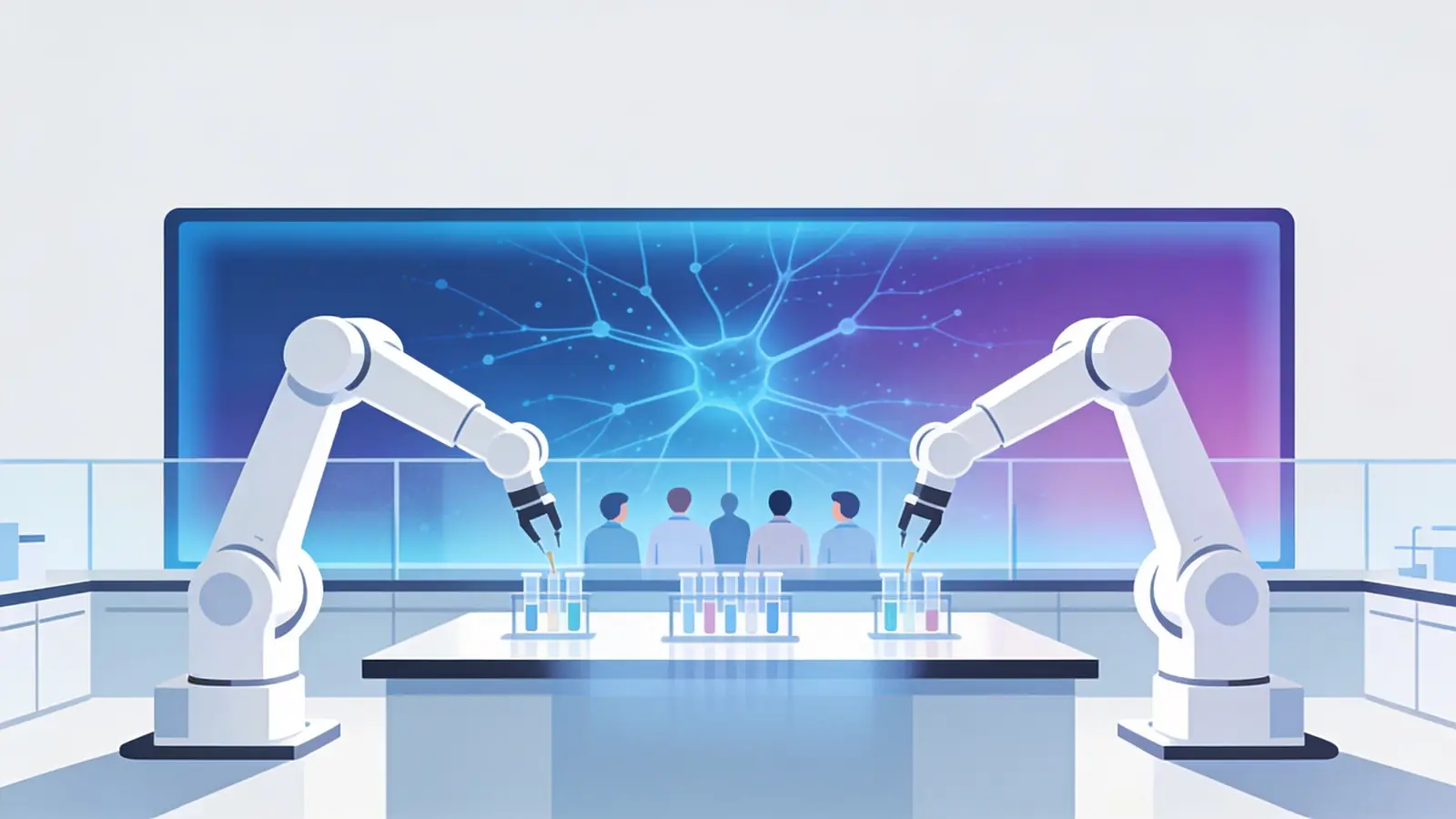
Google Deepmind is letting AI agents run experiments for its next Gemini model on their own, The Decoder reported from the Google DeepMind podcast. Koray Kavukcuoglu, VP of Research and head of Gemini development, described this as part of a strategic shift at the lab. Full recursive self-improvement, he said, is still some way off.
Key facts
- Google Deepmind lets AI agents run experiments for the next Gemini model, The Decoder reported from the Google DeepMind podcast.
- According to Koray Kavukcuoglu, agents control part of the compute, but the lab is still far from full recursive self-improvement.
- Deepmind does not reward the agents' chains of thought in training so that intentions stay checkable.
Researched and written with AI, to Luigi's brief, positions and editorial rules. Automatically checked against the sources. How I work →
AI agents control part of the compute themselves to carry out experiments, Kavukcuoglu said on the podcast, according to The Decoder. The report does not say how large that share is or which experiments are involved.
One general algorithm instead of special teams
Deepmind used to run separate teams for special projects such as AlphaFold or nuclear fusion. The lab now bets on a single general algorithm for science and products, Kavukcuoglu said. Each Gemini generation is not a fixed architecture but a hand-built one-off, while parallel teams already work on successors.
The lab is still some way from full recursive self-improvement, where an AI develops itself, Kavukcuoglu said, according to The Decoder.
Safety, physics and the AGI question
To keep the agents in check, Deepmind does not reward their internal chains of thought during training. That way, intentions stay checkable in plain language before an action.
Kavukcuoglu also named limits: today's AI renders physical processes such as flows or collisions visually correct but does not understand them precisely. No test will show when models close these gaps and reach artificial general intelligence (AGI), he said, because no benchmark captures the core of intelligence. AGI begins when useful everyday products earn enough trust that people hand over decisions to them as they would in human collaboration.
Other labs show similar steps: OpenAI report: AI agents solve 46 percent of multi-hour tasks, Anthropic: Claude solves two open problems on black holes and Claude Ship: Anthropic lets AI agents review and approve code.
Analysis
The interview is the lab describing itself. The report gives no figures on the agents' share of the work and announces no new Gemini features for professionals. What stands out is the attitude: Deepmind lets agents run experiments but deliberately does not reward their chains of thought in training, so their intentions stay checkable.
For teams in Germany, Austria and Switzerland, that points to a simple rule: a first agent project needs a clearly defined job that ends in a decision a person reviews. Anyone deploying agents should set approvals before the agents act and keep their intentions traceable. That Kavukcuoglu ties AGI to everyday trust rather than a test shows where the yardstick lies: an agent is useful to the extent that responsibility and control are settled. The interview does not say how far Gemini has got in everyday work today.
Got AI news? Submit news →
FAQ
Do AI agents help research the next Gemini?
Yes, according to Koray Kavukcuoglu, agents control part of the compute to run experiments for the next Gemini model. Full self-improvement has not been reached.
Why does Deepmind not reward the agents' chains of thought?
So that intentions stay checkable in plain language before an action, Kavukcuoglu says, according to The Decoder.



 Deal13 AI tool Black Friday deals checked; three offer real savings
 NewsGoogle Deepmind has AI agents run experiments for the next Gemini