 BUSINESS
Developments · · 2 min read · Source: Euronews
Prix Goncourt: Winner Jaenada reveals a ChatGPT sentence in his novel
Philippe Jaenada, who won France's most prestigious literary prize on November 3, 2026, used AI three times while writing his novel. He says one sentence in the book was generated by ChatGPT and included to play with the reader.
My tool tip · AdWispr Flow – AI dictationTry it free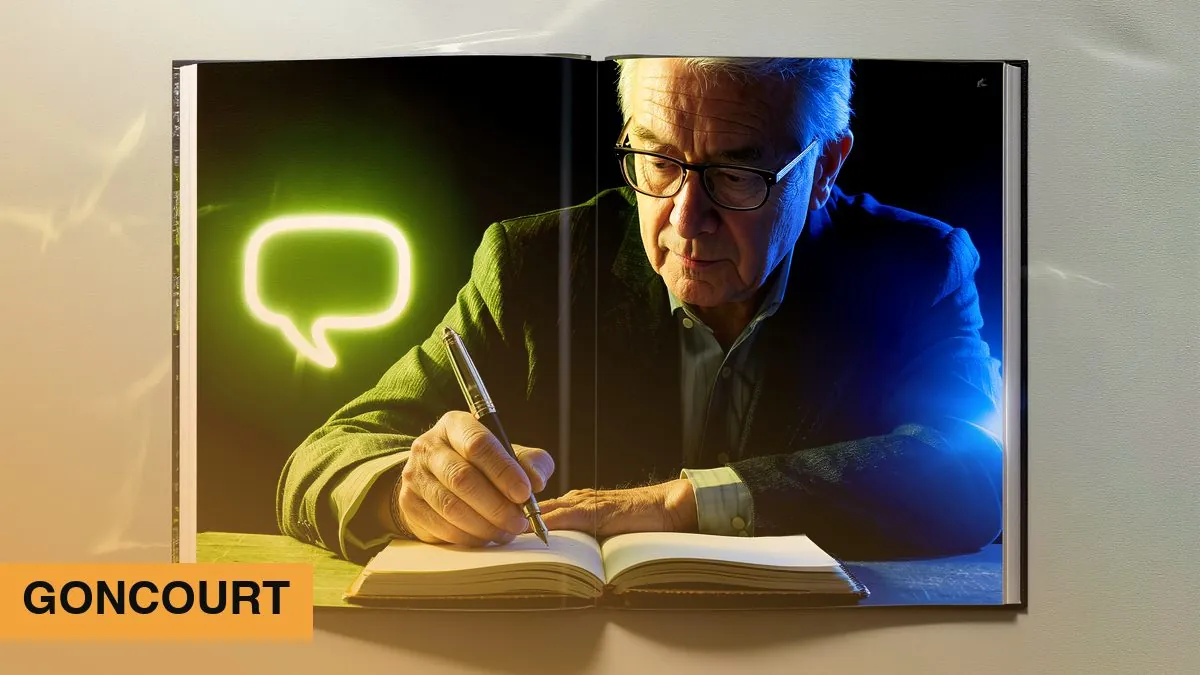
Key facts
- Philippe Jaenada won the Prix Goncourt on November 3, 2026, for "L'Inconnue du quai de Javel."
- According to Euronews, he used AI three times: a ChatGPT sentence in the novel, a passage mocking an absurd ChatGPT answer, and technical research.
- A few weeks earlier, another author was dropped from the Goncourt shortlist over AI use and plagiarism accusations.
What Jaenada said
Jaenada won the Prix Goncourt for "L'Inconnue du quai de Javel," a novel about the unsolved murder of a young woman in late-1940s Paris. Speaking on French radio station France Inter, he described three uses of AI, according to Euronews:
- A sentence generated by ChatGPT appears in the novel, deliberately, as a game with the reader. He only revealed it to the jury on the day of the award.
- In one passage, the book pokes fun at an absurd ChatGPT answer to a technical question.
- He used AI for technical research.
His position: we have to use it, and we have to say so.
Why the topic is so sensitive
The debate didn't come out of nowhere. A few weeks earlier, another author admitted writing parts of his novel with AI. He was dropped from the second Goncourt shortlist and excluded from other prizes, and his publisher ended the collaboration, although plagiarism accusations also played a role. Meanwhile, France now has a separate prize for books co-written with AI.
The reactions
Opinions on social media are split: some see AI in writing as as normal as a spellchecker, others are disappointed and want authors who write on their own. The report doesn't mention any Goncourt rules on AI use.
What this means for you
- Transparency matters: explaining your own AI use lands better than being caught.
- AI for research is widely accepted, AI text in the finished work remains contested.
- The debate isn't just about literature but about anyone publishing text under their own name.
How to use this
Write a short AI rule for your content: what you use AI for (for example research, drafts, images) and when you label it. Share it with your team so everyone handles it the same way.

Luigi's take
The contrast between the two Goncourt cases is instructive: one author openly explained how he used AI, the other had to admit it. Marketing works the same way. Customers and readers forgive AI assistance, but not the feeling of being deceived.
That's why I openly label AI images and AI-assisted content on this website. My advice: set a simple rule for your team or company about what AI is used for, such as research, drafts or images, and when you label it. A clear rule up front beats an explanation afterward.
Source
Euronews: Goncourt 2026 winner Philippe Jaenada admits using AI in novel
More sources
- Euronews (Deutsch) – Deutsche Fassung des Berichts
This article was researched and written with AI assistance. Responsible: Luigi Lugmayr.



 DealPDFelement Black Friday: what 'up to 84% off' really saves