 BUSINESS

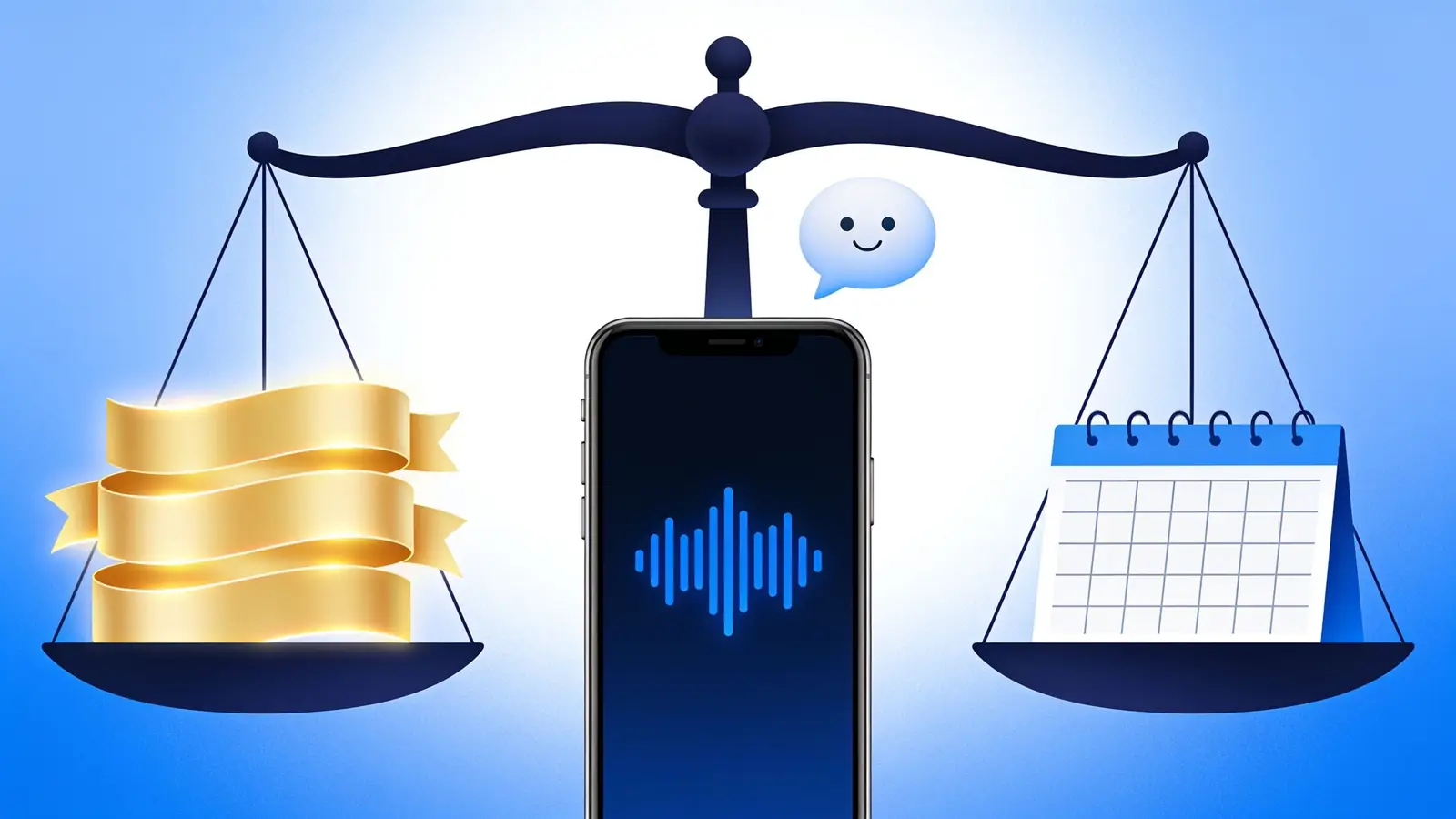
South Korea's Korea Fair Trade Commission (KFTC) is reviewing Apple's Siri advertising for the iPhone 16, heise online reports. The question is whether Apple misled customers by promoting AI features that reached Korea months after the announced date. For companies that advertise AI features themselves, the case shows how closely availability claims are read.
Key facts
- South Korea's KFTC is reviewing Apple's iPhone 16 advertising over delayed AI features, heise reports.
- Contextual Siri was announced for early April 2025 and arrived in Korean in October 2026.
- In the US, Apple intends to pay $250m, with up to $95 per buyer of certain iPhones.
Researched and written with AI, to Luigi's brief, positions and editorial rules. Automatically checked against the sources. How I work →
Contextual Siri was announced for Korea for early April 2025. In Korean, it arrived only in October 2026, about a year and a half later, heise reports. The Apple Intelligence features Image Playground (image generator) and Genmoji (AI emoji) were also delayed in Korea.
According to heise, the review process has begun after a long delay. According to the investigation paper, as quoted by heise, the respondent concealed, shortened or omitted important information relevant to consumers' purchasing decisions. Criticism includes vague notes on the iPhone 16 website about which features were already available in US English and when Korean would follow.
Possible consequences for Apple
The KFTC's investigator already sees first violations of South Korean advertising law, heise writes, and demands corrections to the advertising as well as fines that could run into the millions. Nothing has been set.
Apple told US media it cooperated with the KFTC and reads the findings differently from the investigator. The company plans a comprehensive defence, so the case could drag on. Siri AI is now available in South Korea, heise reports; Apple describes it as a completely new version of Siri that is more capable and more personal.
Background: US class action
In the US, Apple intends to pay $250m for advertising an AI Siri in 2024 that arrived only years later. Buyers of certain iPhones are to receive up to $95. The source gives no details on proceedings in Germany, Austria or Switzerland. Consumer groups are also challenging AI promises there, as warnings sent to Anthropic and OpenAI show.
Analysis
The dispute is less about technology than about advertising: showing a feature that customers cannot yet use in their own country is being examined as possible deception in two jurisdictions. Nothing has been decided in South Korea, and Apple disputes the investigator's view.
For marketing teams the lesson is sober. Anyone promoting AI features should state availability by language, country and plan in the ad itself, not only in footnotes or subpages. Trust is a brand's most important asset, and a promise customers cannot redeem for months erodes it. AI claims belong where statement and reality match. Whether the KFTC imposes fines is open, and the source does not say whether EU authorities are looking at similar cases.
Got AI news? Submit news →
FAQ
Why is South Korea reviewing Apple's Siri advertising?
The KFTC is examining whether Apple promoted contextual Siri, Image Playground and Genmoji for the iPhone 16 without delivering them in Korea on the announced date.
Could Apple face fines in South Korea?
According to heise, the investigator demands corrections and fines that could reach the millions. Nothing is set, and Apple plans to defend itself.
Source
heise online: Wegen problematischer Siri-Werbung: Apple-Ärger auch in Südkorea

 DealSurfer SEO cuts annual plans by 30% for Cyber Week, year one only
 NewsSouth Korea's KFTC reviews Apple's iPhone 16 Siri advertising