BUSINESS

Companies · · 2 min read · Source: United Airlines
United locks out AI agents. What it's really guarding is the customer
Want your AI assistant to book the flight? Not with United. The airline is restricting third-party AI agents on its own site and through travel agencies, one day after OpenAI bought an AI travel startup.
Researched and written with AI, to Luigi's brief, positions and editorial rules. Automatically checked against the sources. How I work →
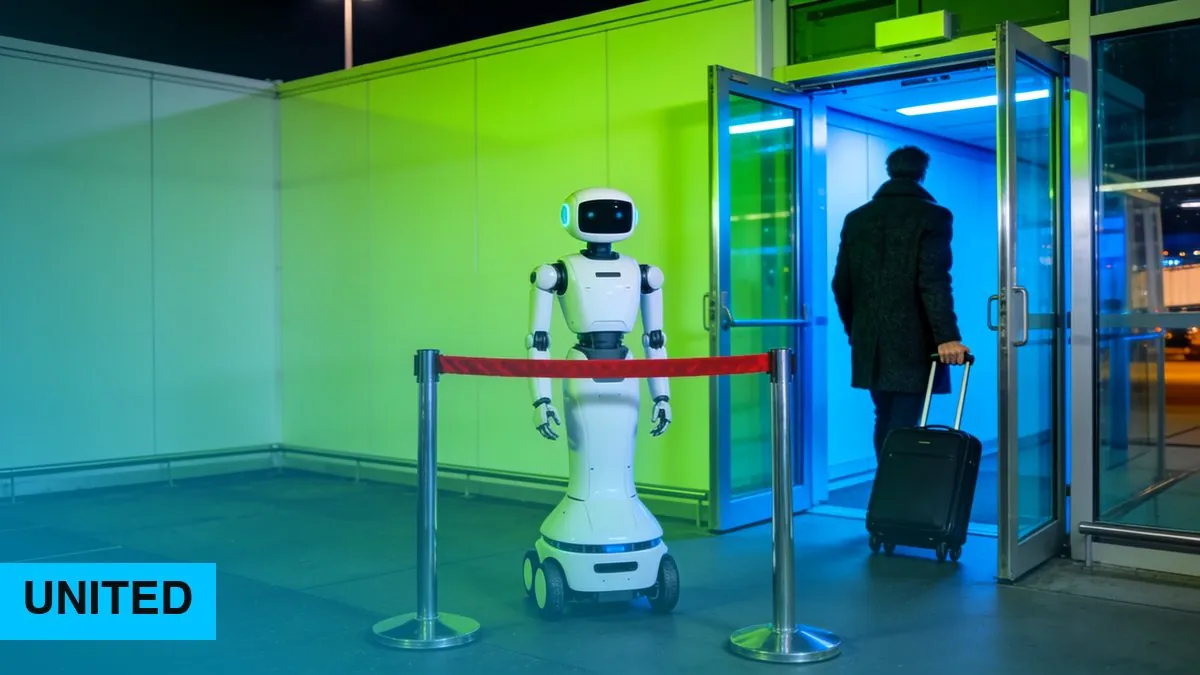
Picture a customer who buys from you without ever showing up. No site visit, no app session, no newsletter click. Their agent handled it. On November 11, United Airlines shut that scenario down, at least for itself.
What United decided
- The restriction: United is limiting access for unauthorized third-party personal AI agents and assistants, on its own digital platforms and indirectly through travel agencies and aggregators, by updating its booking, ticketing and distribution policies.
- The official reasons: sharing login credentials with AI assistants exposes sensitive data; agents can trigger unintended purchases, account changes or use of MileagePlus miles; and automated actions may break FAA and DOT rules, for example at check-in, where a human has to confirm there are no prohibited items in the bag.
- What stays: booking, seat selection and rebooking in the United app. United says it will keep evaluating how personal AI assistants interact with its services.
The timing matters. A day earlier, TechCrunch reported that OpenAI acquired Odessia, an AI travel-agent startup. OpenAI said travel is one of the things users frequently ask ChatGPT about.
Sounds like security. It's distribution
The security arguments are real. Passwords in third-party tools are a risk, and so are accidental bookings. But to me that's half the story. Whoever closes the sale owns the relationship: the data, the upsell, the seat fee, the loyalty. An agent in between is a new middleman, and airlines spent two decades and a lot of money getting rid of middlemen.
My rule of thumb: let agents in and you get compared. An agent hunts for the best price, not the nicest brand. United is choosing not to become a row in somebody else's comparison table. Note what United doesn't explicitly ban: agents showing flights. The purchase, though, is supposed to stay in United's own channels. Read: the app.
The catch: customers don't ask permission
Gatekeeping only works as long as customers accept the detour. If a personal agent can't book United, it may simply book a competitor. Then United hasn't locked out a middleman, it has removed itself from the agent's consideration set. United itself points out that banks and retailers have taken similar steps. This isn't an airline quirk. It's a pattern.
What I'd do now
- → Write an agent policy before someone forces one on you: what may a third-party agent see, compare and buy on your channels?
- → Sharpen the reason to go direct. If you want customers in your app, give them a real advantage there, not just a block somewhere else.
- → Make your product data readable for agents even if you want to own checkout. Being invisible isn't a strategy.
Bottom line: United isn't locking out AI, it's defending the moment a prospect becomes its own customer.
Key facts
- Since November 11, 2026, United Airlines restricts unauthorized third-party personal AI agents on its own platforms and indirectly through travel agencies and aggregators.
- United cites exposed credentials, unintended purchases, account changes or mileage use, and possible FAA and DOT rule violations; the United app remains available for booking and rebooking.
- On November 10, 2026, TechCrunch reported that OpenAI acquired AI travel-agent startup Odessia; terms were not disclosed.
Source
United Airlines: United Restricts Access for Third-Party AI Agents
More sources
- TechCrunch – 10.11.2026: OpenAI übernimmt das KI-Reiseagenten-Startup Odessia (Konditionen nicht genannt, wirkt wie Acqui-Hire); OpenAI: Reisen gehört zu den Themen, nach denen Nutzer oft fragen; Booking.com, Expedia und KAYAK sind bereits Kunden oder Partner.