BUSINESS

Developments · · 2 min read · Source: PolitiFact / Poynter
AI political ads hit $187M. Trust is what held them back
If any industry will do nearly anything for attention, it's political campaigning. Yet the first look back says 2026 wasn't the "AI election". The reason is a number every marketing team should know.
Researched and written with AI, to Luigi's brief, positions and editorial rules. Automatically checked against the sources. How I work →
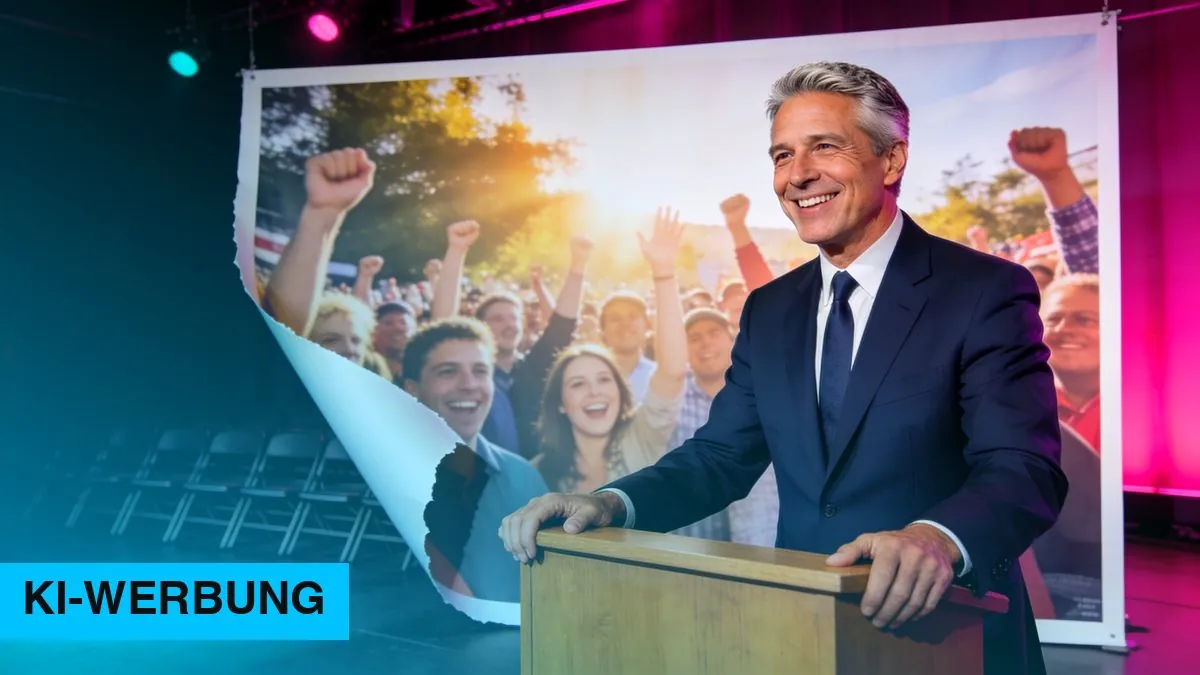
Picture the toolkit: images, videos and voices, as many as you want, for pocket change. And an industry with exactly one goal, winning. You'd expect it to use everything. US campaigns didn't. Not out of ethics. Out of calculation.
What the numbers say
- Spend: By October 29, 2026, the Wesleyan Media Project counted more than $187 million on 289 political ads generated or enhanced by AI. Per PolitiFact, that's more than 3,000 times the roughly $50,000 in the 2024 cycle.
- Context: Total political ad spending for 2025–2026 was projected at about $11.6 billion (AdImpact). AI ads are a small slice. The project itself says its count is almost surely too low, because many ads carry no disclaimer.
- Who: Just over 90% of the spending came from the Republican side.
- How: Some full deepfakes, some AI edits of real scenes, like extra people added to a crowd.
71%: the number that pumped the brakes
PolitiFact reports that campaigns held back partly out of fear of voter backlash. A 2025 Pew study explains why: 71% of Americans would like a candidate less if they knew AI had helped write a speech they otherwise enjoyed. Read that twice. The speech was good. It still lands worse once the source comes out.
To me, trust is a brand's most important asset. That's why at burgerme I deliberately kept AI-generated content out of the main brand's communication. The election now shows at scale why: AI cuts production costs, but it can cost credibility. Get caught and you pay twice. That holds for candidates and it holds for brands. The answer isn't abstinence. It's disclosure wherever AI is in the work.
The quiet part: messaging for chatbots
Almost in passing, the look back contains a second point that matters more to marketers than any deepfake: per Reuters, campaigns shaped their talking points so AI chatbots would be more likely to surface them to voters. That's GEO on the campaign trail. The question is no longer just which ad someone sees, but how the AI describes you when someone asks without using your name.
What I'd do now
- → Write a one-page rule: where do we use AI images, video and voices, and how do we label them? Ideally before someone else exposes it for you.
- → Especially with real scenes (events, customers, teams): no undisclosed AI edits. A padded crowd is exactly the kind of detail that costs trust.
- → Ask ChatGPT and Claude five real customer questions without your brand name and log whether and how you show up. Date, answer, sources.
Bottom line: Even political campaigns tapped the brakes on AI, because a good message lands worse the moment it smells like deception, and brands play by the same rules.
Key facts
- By October 29, 2026, the Wesleyan Media Project counted more than $187 million on 289 AI-generated or AI-enhanced US political ads; per PolitiFact, more than 3,000 times the roughly $50,000 in the 2024 cycle.
- Total political ad spending for 2025–2026 was projected at about $11.6 billion (AdImpact); the project says its own AI figure is likely an undercount.
- A 2025 Pew study found 71% of Americans would like a candidate less if they knew AI helped write a speech they otherwise enjoyed.
Source
PolitiFact / Poynter: AI-generated political ads in the 2026 midterm elections
More sources
- Wesleyan Media Project – Primärquelle der Zählung, 29.10.2026: über 187 Mio. $ für 289 KI-generierte oder -bearbeitete Anzeigen; gut 90 % der Ausgaben (169 Mio. $) republikanisch; 82 % der Anzeigen republikanisch, 13 % demokratisch; viele ohne Hinweis, Zahl laut Projekt „almost surely lower than the actual level“.



 DealBlack Friday price check: Descript, Jasper & co. discount all year
 NewsAI political ads hit $187M. Trust is what held them back
 NewsRailway breach: a $740K AI bill. Your API key is a credit card