 BUSINESS

Illustration
Developments3 min read
c't 3003 uses AI agent Codex to give a Samsung TV an Apple TV look
C't 3003, the tech video series of German publisher heise, had the AI agent Codex rebuild the Tizen interface of a six-year-old Samsung TV into an Apple TV-style look, heise online reports. According to the agent, it disabled ten advertising and tracking components in about five minutes; whether the TV still sends data has not been measured. The piece is presented as an experience report, not a tutorial.
Key facts
- c't 3003 had the AI agent Codex rebuild the Tizen interface of a six-year-old Samsung TV into an Apple TV-style look.
- By the agent's account, it disabled ten advertising and tracking components in about five minutes; no traffic measurement exists yet.
- Vetro needs root access and has about 400 GitHub stars; according to c't 3003, FreeMyTV works without root and has about 6,000.
Researched and written with AI, to Luigi's brief, positions and editorial rules. Automatically checked against the sources. How I work →
The starting point was a six-year-old Samsung TV running Tizen OS, according to c't 3003. The video's author complains that the system is slow, with at least a one-second delay on every button press, and full of ads. He asked Codex whether projects exist for Tizen like those already common for Android TV.
For Android TV, c't 3003 names the toolkit CleanYourTV, which had 60,000 GitHub stars at recording time and is meant to remove tracking, ads and bloatware. For Samsung, Codex suggested among others the project Vetro by andrearicci93, which has about 400 stars, builds its own launcher and needs root access. FreeMyTV, with around 6,000 stars, works without root, according to c't 3003. Vetro also remaps the remote's home button so it no longer opens the old Tizen menu.
How the agent worked
The agent asked for permission to use Apple's Xcode Command Line Tools, such as Git and Python, and proposed the open-source tool Apps2Samsung, which allows apps from outside Samsung's app store to be installed (sideloading). The author approved both.
After a hard reset, the new launcher needed about 100 seconds to start, Codex said. It attributed this to a startup error that could be fixed. The author then asked it to cut off everything not strictly needed, and Codex asked what should stay. Five minutes later it had, by its own account, disabled ten advertising and tracking components. Features the author wanted to keep, such as AirPlay, still worked.
No independent check of the network traffic exists yet. The author says he will hand the TV to c't colleagues for measurement and admits he is trusting the agent for now.
An Apple TV look by prompt
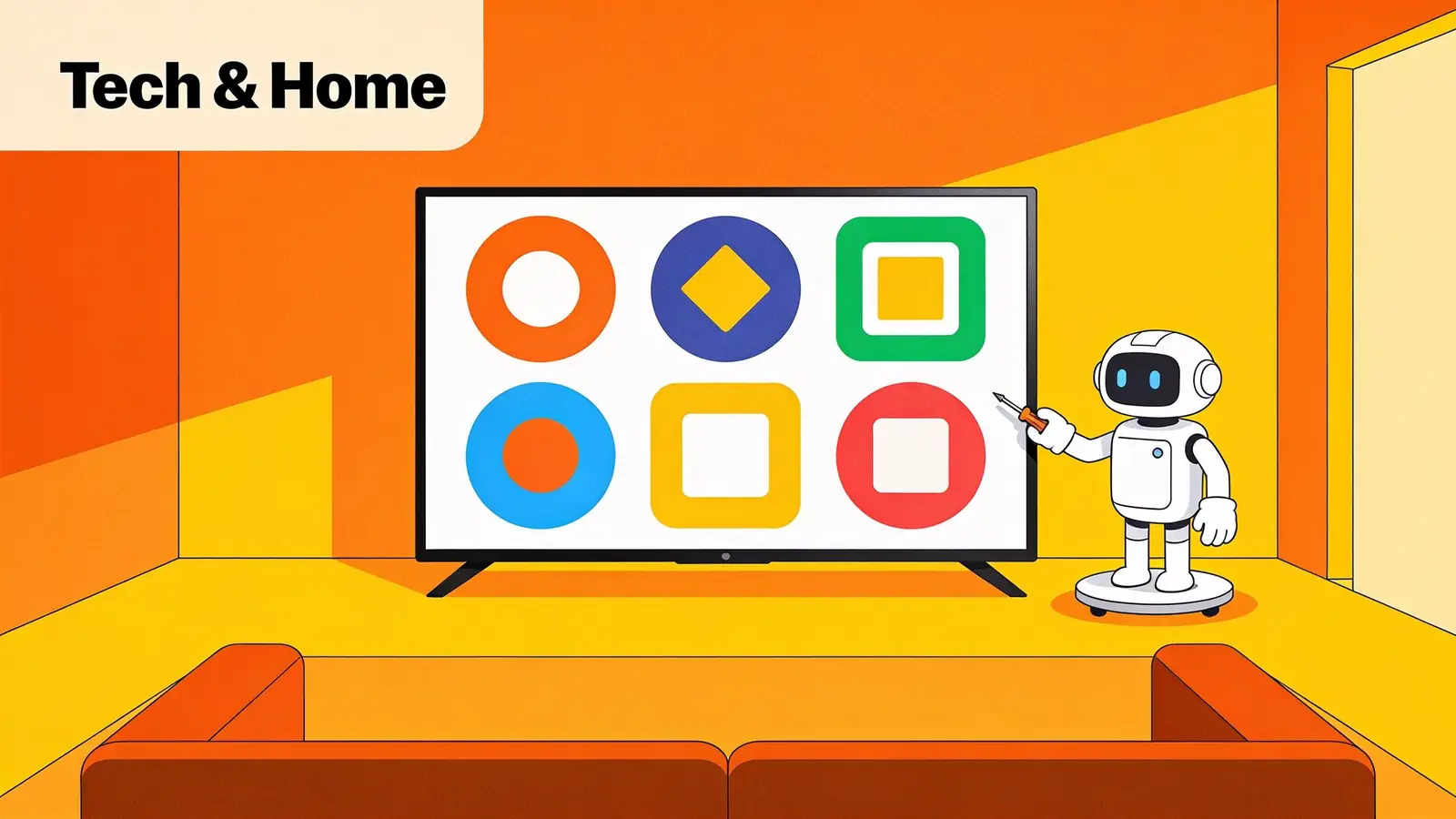
Asked for an interface “exactly like Apple TV”, Codex initially refused to find and embed Apple icons itself, citing licensing. The author found a GitHub repository with similar icons and gave it to the agent. After about ten minutes the new interface appeared, with large icons in full screen. The animations are less elaborate than Apple's, the author concedes, but the result does not cost 350 euros.
How well this transfers to other devices remains open. The author himself stresses that the outcome depends on the TV, the AI model and what the agent does. On agent risks in other contexts, I4U recently covered Microsoft's warning about the ARTEX AI framework and the Harvard study on the review bottleneck for AI code. How agents may ask humans for input is shown by the release of Tasks and Elicitation in MCP.
Analysis
The experiment shows less that smart-TV interfaces can now be rebuilt at will than how an agent handles a clearly bounded job: it proposes projects, asks permission before accessing tools and delivers a result within minutes that a human can judge. That structure matches a sensible first agent project, one that ends in a concrete decision. It is also notable that the agent drew a licensing line and the human got around it via another repository. The source does not say where responsibility lies for that.
For teams and brands the takeaway is limited, because only a single self-experiment on a private device is documented. The tracking effect is unmeasured, and root access and sideloading are interventions that should not be expected on company devices without IT approval. Anyone handing agents similar tasks should give them a briefing with no-gos, as with any agency, and check the result before it goes live. The c't measurement of network traffic will show how much of the switch-off of ad and tracking components actually holds.
Got AI news? Submit news →
FAQ
Can an AI agent rebuild a Samsung TV interface?
c't 3003 reports a working attempt with Codex on a six-year-old Samsung TV. The author says results depend on the TV, the AI model and the agent; it is not a tutorial.
Is the rebuilt TV free of tracking?
Unclear. Codex says it disabled ten advertising and tracking components. The author could not verify this and plans to have c't colleagues measure the network traffic.
Source
heise online (c't 3003): c't 3003 baut Fernseher mit KI-Agent um: Tizen wird zu „Apple TV“


 DealSurfer SEO cuts annual plans by 30% for Cyber Week, year one only
 NewsAnthropic Siren test: older models take bait in up to 26% of cases
 NewsBanned Nvidia Blackwell chips found in Shanghai data centre