 BUSINESS


Illustration
Companies2 min read
German consumer group sues OpenAI over ChatGPT cancellation hurdles
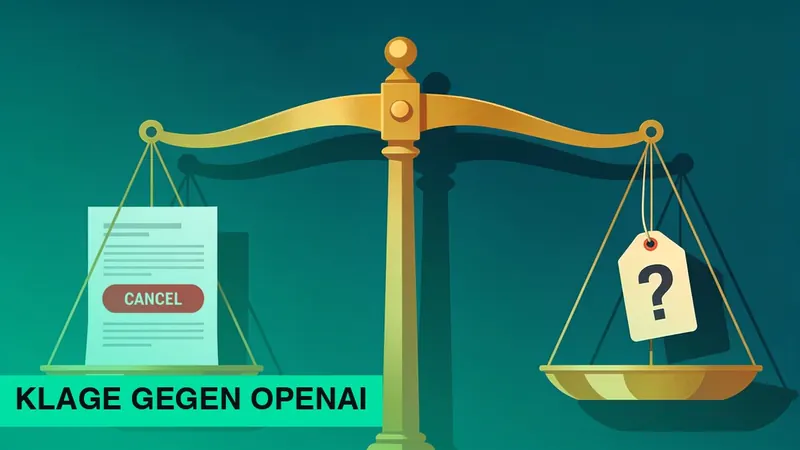
The Verbraucherzentrale Brandenburg, a German consumer protection group, has sued OpenAI over how paying ChatGPT subscribers can cancel, t3n reported. The group calls cancellation “unnecessarily complicated” and says a clause allowing price changes is invalid. For subscribers in Germany, the case touches on how they end a plan and whether OpenAI may change prices unilaterally.
Key facts
- The Verbraucherzentrale Brandenburg sued OpenAI; the suit was filed on 23 November 2026 at the Brandenburg Higher Regional Court, t3n reported.
- The group objects to ChatGPT cancellation, which it says does not meet the legal cancellation-button requirements, and to a clause letting OpenAI change prices “as needed”.
- The suit targets OpenAI's Irish subsidiary in Dublin and is meant to cover existing subscriptions too; the next steps are unknown.
Researched and written with AI, to Luigi's brief, positions and editorial rules. Automatically checked against the sources. How I work →
According to t3n, the suit was filed on 23 November 2026 at the Brandenburg Higher Regional Court. It targets OpenAI's Irish subsidiary in Dublin. How and when the case proceeds is not yet known. t3n does not cite a response from OpenAI.
Cancellation and price clause at issue
The group had issued a formal warning to OpenAI in July 2026. According to t3n, OpenAI did not submit a binding cease-and-desist declaration even after a deadline extension, and an out-of-court settlement failed.
The consumer group objects to two points. First, OpenAI does offer a way to end subscriptions, but in the group's view it does not meet the legal requirements for a cancellation button. Second, OpenAI reserves the right in a contract clause to change prices “as needed”.
The group argues the clause is invalid. It allows unilateral price changes without sufficiently defining the conditions, and increases would not have to be tied to actual cost increases.
What the lawsuit aims to achieve
The group wants OpenAI to stop using the clause and to stop relying on it against consumers in Germany. According to the Verbraucherzentrale Brandenburg, that would also apply to existing subscriptions.
Whether and when a ruling comes is open. For other recent changes, see our report on the shared usage limit for ChatGPT Chat and Work, GPT-6.2 for paid plans and ChatGPT Space for Plus subscribers.
Analysis
The case shows that for AI subscriptions the contract terms matter as much as the feature list. OpenAI changes plans and limits often, and a clause that permits price changes “as needed” makes budgets hard to plan for teams. Whether it is valid is for the court to decide; the consumer group considers it invalid.
In practice, freelancers and marketing teams should read the terms and the cancellation path of a tool before building it into processes and budgets, and put a calendar reminder on renewals. Anyone who no longer needs a plan should start cancellation early through the route the provider offers and keep the confirmation. As with other AI features, checking the terms is the user's own job.
Got AI news? Submit news →
FAQ
Why is the consumer group suing OpenAI?
According to t3n, the Verbraucherzentrale Brandenburg considers cancelling ChatGPT subscriptions unnecessarily complicated and a clause on price changes “as needed” invalid. An out-of-court settlement failed.
When was the lawsuit against OpenAI filed?
On 23 November 2026 at the Brandenburg Higher Regional Court, against OpenAI's Irish subsidiary in Dublin. According to t3n, it is not yet known when the case proceeds.
Source
t3n: Wegen ChatGPT-Abos: Verbraucherzentrale verklagt OpenAI



 Deal13 AI tool Black Friday deals checked; three offer real savings
 NewsGerman consumer group sues OpenAI over ChatGPT cancellation hurdles
 NewsOpenAI merges ChatGPT Chat and Work under one shared usage limit