 BUSINESS

Developments · · 3 min read · Source: xAI (Entwickler-Doku)
Your AI copy now carries a watermark. The risk is your contract
Since Saturday, xAI watermarks every piece of text from the Grok API by default. That makes three of the big labs. For content teams this isn't a tech footnote. It's a question of what you've actually promised your clients.
Researched and written with AI, to Luigi's brief. How I work →
My tool tip · AdWispr Flow – AI dictationTry it free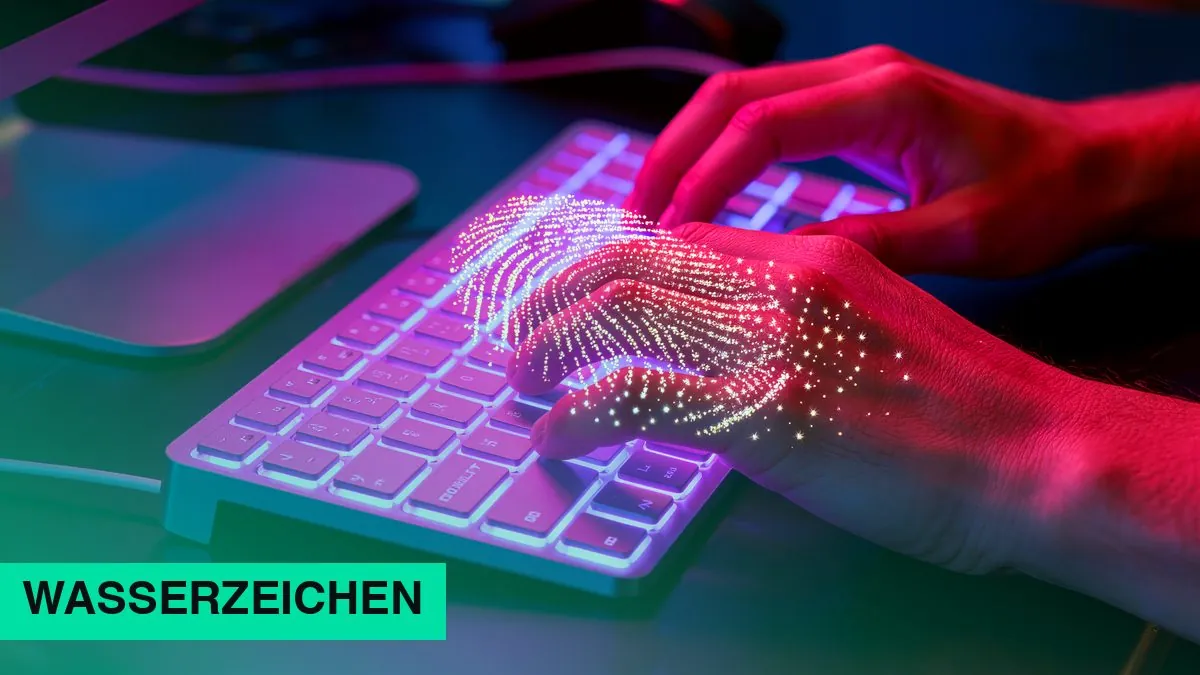
You've seen the clause. "All copy is written individually by our writers." It sits in plenty of agency contracts and freelance proposals. Until now nobody could check it. That's changing, quietly, one model at a time.
What happened
- xAI: Since November 7, text from seven Grok models in the API carries an invisible watermark by default, including structured output and tool calls. Responses come back with an
x-watermark: trueheader. Only team admins can switch it off, per model, and only after confirming a legal exemption. The Grok app and X are reportedly not affected. - OpenAI: Since October, OpenAI has been rolling out its textGrain method for ChatGPT and Codex, but only in the EU. In the API it's optional worldwide and off by default.
- Anthropic: Announced in August that it would watermark Claude text worldwide, new models from launch, older ones in stages.
All three point to the EU AI Act's transparency rules. The technique is similar across the board: the model nudges its word choices while it writes. Nothing visible, nothing that copy-paste strips out. For now only approved testers can detect it; the detectors aren't public.
This isn't a tech story. It's a contract story
Here's what I find interesting. The debate is framed as "detection." The real shift is somewhere else. "AI or human?" used to be a matter of faith between agency and client. Now there is, at least in principle, a measuring device. And once a measuring device exists, someone eventually writes it into an RFP.
So the risk doesn't sit with the model vendor. It sits with whoever promised something they don't deliver. If you sell "100% handwritten" and draft with Claude or ChatGPT internally, you now have a credibility problem in storage. Not today. Exactly on the day an unhappy client goes looking for ammunition.
For brands it's the mirror image. If you buy AI-assisted copy, know what you're buying and be able to say so out loud. Trust comes from saying and doing lining up, not from perfect camouflage.
The catch: the mark is weaker than it sounds
In OpenAI's own tests, detection dropped from about 92% to 66% when 10% of the words were swapped for synonyms. Short texts, translations and heavily edited passages are hard to check. And OpenAI says it plainly: a missing watermark doesn't prove a human wrote it.
To me that's the second wake-up call. A signal that blurs under light editing and returns "uncertain" on mixed text is no lie detector. Use it like one and you'll produce false verdicts, quite possibly against your own people. The honest answer isn't a tool. It's a clear process: what you use AI for, who approves, what you disclose.
What I'd do now
- Read your contracts. Search proposals, terms and briefs for promises like "written individually" or "no AI." Align them with what you actually do.
- One-page AI policy. What AI is allowed for (research, drafts, variants), who signs off, when you disclose. Human in the loop as a rule, not an excuse.
- Check your pipelines. If you run Grok, Claude or the OpenAI API inside your own tools, check headers and settings so you know what leaves the building marked.
Bottom line: The watermark won't tell anyone whether your copy is good. It might tell them whether your contract is true.
Key facts
- Since November 7, 2026, xAI watermarks text from seven Grok models in its API by default; only team admins can opt out, and only by confirming a legal exemption.
- OpenAI has watermarked ChatGPT and Codex text in the EU since October 2026 (textGrain); Anthropic announced worldwide watermarking of Claude text in August 2026.
- In OpenAI's tests, detection fell from about 92% to 66% when 10% of the words were replaced with synonyms.
Source
xAI (Entwickler-Doku): Output Watermarking
More sources
- TechCrunch – Bericht vom 5.10.2026 zu textGrain, Anthropic-Wasserzeichen seit August und Erkennungsraten
- NextFor AI – Bericht vom 2.11.2026 zu Umfang, Header und Opt-out bei xAI
- BleepingComputer – Bericht zu Anthropics weltweitem Text-Wasserzeichen (August 2026)
 Dealneuroflash's Black Friday: a real 25% off, minus the code