 BUSINESS

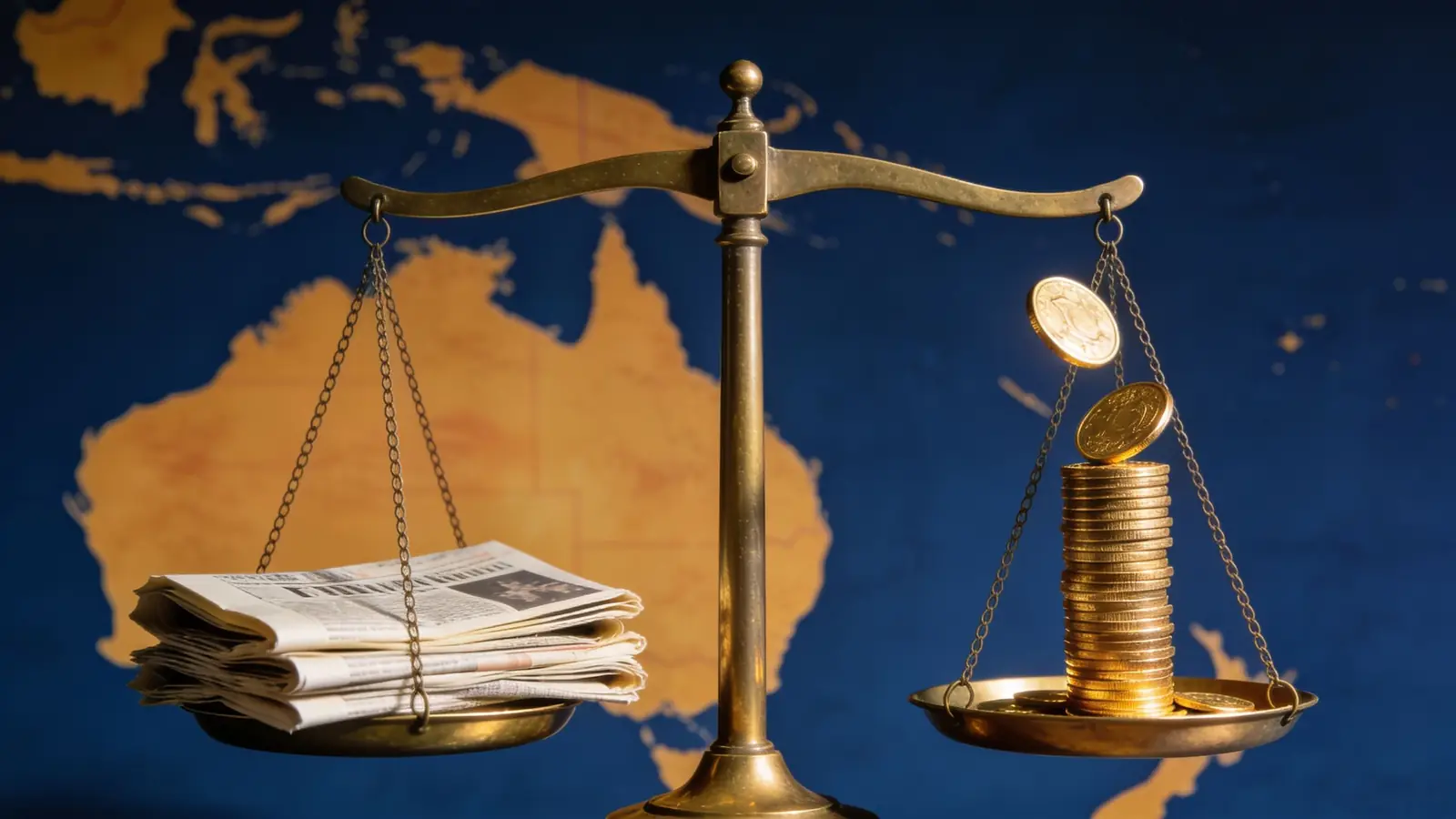
Google is terminating its agreement with the Public Interest Publishers Alliance (PIPA), a group of Australian publishers, at the end of the year, heise online reported. The reason is Australia's new News Bargaining Incentive, which took effect on 26 August 2026, and Google says it will sign no new deals with news companies.
Key facts
- Google is terminating its 2022 agreement with Australian publisher alliance PIPA at the end of the year, heise online reported.
- The News Bargaining Incentive took effect on 26 August 2026 and sets 2.75% of ad revenue unless firms strike deals with local media.
- A Google spokesperson said the company has deals with 90 news companies and 226 publications and will sign no new ones.
Researched and written with AI, to Luigi's brief, positions and editorial rules. Automatically checked against the sources. How I work →
PIPA brings together about two dozen smaller publishers. Google signed a deal with the group in 2022 covering payment for displaying news content. According to the Australian Financial Review (AFR), citing anonymous sources, Google pays about A$3m (roughly €1.8m) under it. The details are not public.
The agreement originally ran for five years. Last year Google converted it into a one-year contract that renews automatically, heise reported. It carries a 30-day notice period, which Google has met, according to heise. In a letter to PIPA, the company said it had to reassess its business position after the law took effect and reached the “difficult decision” to use its right to terminate.
Google and Australia's news bargaining law
The News Bargaining Incentive (NBI) supplements the News Media Bargaining Code of 2021. Tech companies must retroactively pay 2.75% of their advertising revenue from 1 January 2025 to Australia unless they strike agreements with local media. The money is meant to go to local news providers.
The rule applies to companies with more than A$250m in Australian ad revenue, just over €150m. They must also have either 5 million monthly users of a social network or 10 million users of a search engine. Besides Google, heise names TikTok and the US groups Microsoft and Meta, with LinkedIn and Facebook, as affected.
A Google spokesperson told the AFR that Google is the only tech company to have signed deals with Australian media, covering 90 news companies and 226 publications. There will be no new ones. At the hearing, the company said, it had voiced concern that the NBI offers no incentive to reach commercial agreements. The report does not say whether Google will also end other existing agreements.
Background
Australian governments have tried for years to make big tech help fund journalism. The 2021 code required financial agreements between social networks and media groups, but some payments could be avoided if platforms filtered news content out of their services. Meta withdrew from the system in 2024, arguing that demand for news among its users was far too low. The NBI was presented at the end of 2024 partly for that reason.
The dispute is sharpening, heise wrote, because AI summaries of articles in search results mean users no longer visit publishers' sites. On Google's other regulatory fights, see Google backing Mozilla's criticism of Apple in the EU and Google's AI Mode.
Analysis
Google is choosing to end contracts and accept the levy if necessary. That is a signal to lawmakers elsewhere: a payment rule needs an incentive to negotiate, otherwise the levy replaces the agreement. The report does not show whether Google will actually pay the 2.75%.
For publishers, content marketers and advertisers in Germany, Austria and Switzerland, the story is mainly a warning about dependence. A deal with Google is income that can end on 30 days' notice. Anyone building reach needs direct channels to readers first, such as newsletters, direct visits and loyal readers, before expanding the website further. AI summaries that can cost clicks add pressure. The source leaves gaps: there are no figures on lost income for PIPA members and no statement from the publishers. Claims about consequences for German publishers would be speculation.
Got AI news? Submit news →
FAQ
What is Australia's News Bargaining Incentive?
A law in force since August 2026. Large tech firms pay 2.75% of ad revenue, retroactive to 1 January 2025, unless they have agreements with local media.
Which companies does the Australian news law affect?
According to heise, Google, TikTok, Microsoft and Meta, with LinkedIn and Facebook, if they meet the thresholds on ad revenue and user numbers.
Source
heise online: Neues Mediengesetz: Google kündigt Abkommen mit australischen Verlagen


 DealBlack Friday 2026: 14 AI tool deals checked, ElevenLabs leads
 NewsMeta's Muse handles 51% of agentic orders as Amazon weighs access
 NewsOpenAI fixes GPT-6.2 billing error: Astra limits hit 40% faster