BUSINESS

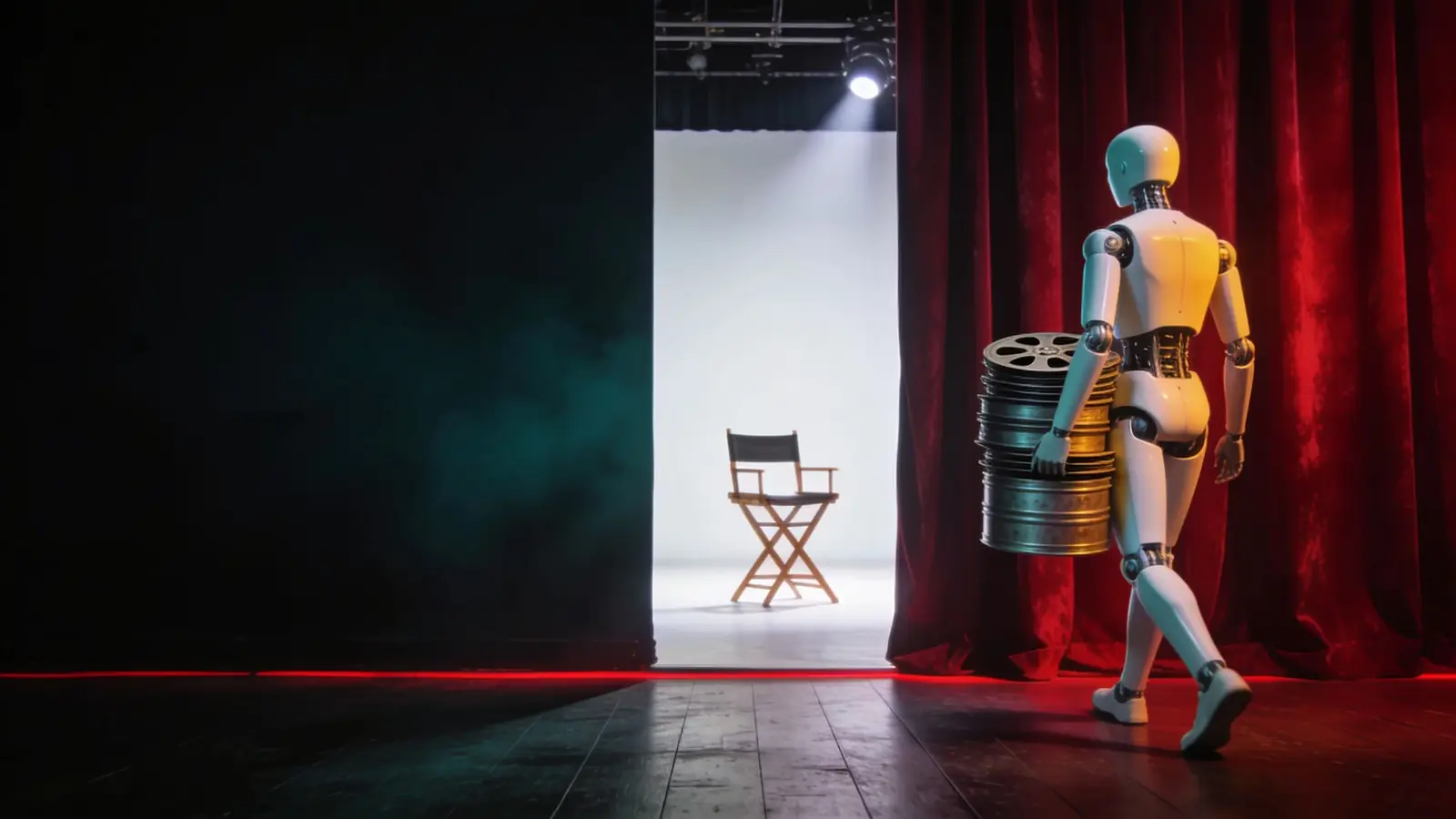
The AI industry sells video AI as a machine that makes clips. An Avid survey of Hollywood editors shows the pros use it for transcripts, audio and search. For marketing teams, that's the better shopping list.
Key facts
- Avid surveyed 120 film and TV editors with the American Cinema Editors in Q2 2026; 93 of them (77.5%) already use AI.
- Top uses are transcription (60.0%), audio cleanup (55.0%) and searching footage (39.2%); 27.5% use generated images or video.
- 67.5% say AI should be built into their existing tools; the biggest barrier is ethics, copyright and security (49.2%).
Researched and written with AI, to Luigi's brief, positions and editorial rules. Automatically checked against the sources. How I work →
Watch any AI video ad and it's the same pitch: type a prompt, get a clip. Generate, generate, generate. Then someone asks the people who cut films for a living what they actually use AI for. The answer sounds a lot less like a keynote. It sounds like a janitor.
What the survey found
Avid, the company behind the editing software Media Composer, surveyed 120 film and TV editors in Q2 2026 together with the American Cinema Editors (ACE). Avid published the results in October; Variety picked them up on November 15. The key numbers, according to Avid:
- 93 of the 120 respondents, or 77.5%, already use AI in their work.
- Top uses: transcription (60.0%), audio cleanup (55.0%), searching footage (39.2%).
- Only 27.5% use generated images or video.
- 67.5% say it matters that AI is built into the tools they already use, not a separate app.
- Biggest barrier: ethics, copyright and security, named by 49.2%.
Avid's own summary: AI belongs in the dress rehearsal, not the show. One editor, per Avid, uses AI images to sketch possible pickup shots but sees no way for them to reach a final output.
The industry sells the generator. Pros buy the cleanup crew
Here's what I find interesting. The market tells a story about a machine that makes the film. The professionals buy the machine that handles the grunt work around it. For marketing teams this isn't a Hollywood footnote. It's a shopping list. Subtitles, transcripts, rescuing bad audio, finding the one line in two hours of interview footage: that's the use case that saves hours every week. The generated clip is the use case that looks great in a demo.
The second number backs it up. Two thirds want AI inside their existing tool, not another window. Translation: the standalone AI video app is in trouble the moment Premiere, Media Composer or Canva ship the feature themselves. It's the exact pattern I wrote about yesterday in the AI graveyard piece. My rule of thumb: use case first, then the tool, and ideally the tool where the work already happens.
The real decision: more or better
Avid points back to the switch to digital editing. It was dramatically faster, yet schedules didn't shrink. The saved time went into more versions and, in the end, better films. Today 75.8% of editors say the best use of AI is more time for storytelling.
To me, that's the question every content team has to answer this week. The hours AI frees up go either into volume or into quality. Most teams will pick volume, because volume is easier to count. But AI is the entry ticket, not the job. When everyone posts more of the same, the winner isn't the brand with the most clips. It's the one with the best.
The catch
Avid sells editing software and has an interest in the claim that AI belongs in the existing tool. 120 respondents from an elite guild aren't a representative sample. I still trust the direction, because it cuts against the hype instead of confirming it.
What I'd do now
- Break down your video workflow: List every step and mark what's craft around the edit (transcripts, subtitles, audio, search, filing) and what's judgment (story, cut, approval). Automate the first group first.
- Start in the tools you own: Check which AI features your editing or design software already has before you license another app.
- Budget the saved hours: Decide upfront where they go, say a second hook variant or better research, not two extra posts.
Bottom lineAI should buy back your hours, not tell your story. Pour those hours into volume and all you get is more of the same.
Got AI news? Submit news →
FAQ
What do professional film editors use AI for, according to Avid?
Mainly transcription (60.0%), audio cleanup (55.0%) and searching footage (39.2%). 27.5% of the 120 respondents use generated images or video.
How reliable is the survey?
It comes from software maker Avid and covers 120 members of the American Cinema Editors, surveyed in Q2 2026. It isn't representative, but in my view it shows a clear direction.
Source
Avid: Everything but the Cut: How Film and TV Editors Are Using AI in Post-Production
More sources
- Variety – Bericht vom 15.11.2026 (über Mediagazer bestätigt), Volltext hinter TollBit nicht abrufbar; alle Zahlen aus der Avid-Primärquelle.
 DealPerplexity and Runway: Black Friday brings credits, not discounts
 NewsHollywood editors use AI for the cleanup, not the cut