BUSINESS

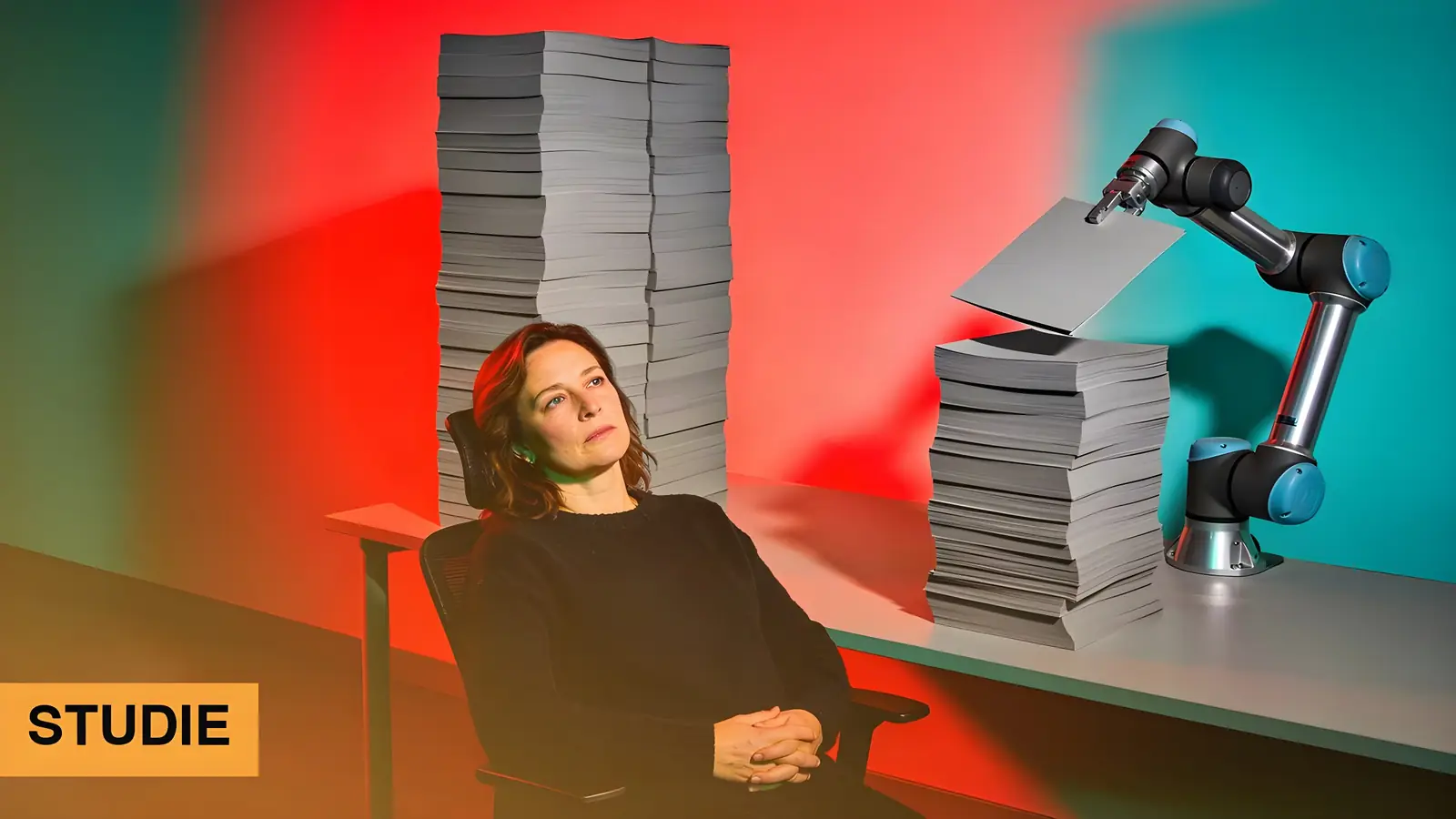
The AI writes, a human hits approve: that's human in the loop at plenty of marketing teams. A Wharton study shows this setup costs quality and variety, while keeping the human at the start takes no extra time at all.
Key facts
- The study by Kartik Hosanagar (Wharton) and Daehwan Ahn (University of Georgia) was published in PNAS Nexus on November 10, 2026; 285 students wrote 549 stories.
- With AI, total time fell 36.2 percent versus writing without AI; total time did not differ significantly between approve-only, own-idea and copilot designs.
- Under approve-only, quality fell more than under copilot, and stories were the most alike (0.779 versus 0.647 without AI).
Researched and written with AI, to Luigi's brief, positions and editorial rules. Automatically checked against the sources. How I work →
You know the workflow. The AI writes, someone skims it, someone clicks “approve.” Human in the loop, box ticked. A new Wharton study says this is the weakest setup of all. And it doesn't even save time.
What the researchers measured
Kartik Hosanagar (Wharton) and Daehwan Ahn (University of Georgia) had 285 students in a University of Georgia course each write a 1,000-word story. Day one without AI, day two with ChatGPT 3.5, randomly assigned to one of three designs:
- Human Confirmation: the AI handles idea, outline, draft and editing. The human only confirms or rejects.
- Human Creativity: the human comes up with the idea and outline, the AI drafts and edits.
- Copilot: human and AI work together throughout.
549 stories, four ratings each. The paper came out in PNAS Nexus on November 10.
Keeping the human up front costs nothing
For me, this is the finding that matters. With AI, total time dropped 36.2 percent versus day one, drafting time 68.6 percent. But total time did not differ significantly between the three designs. Owning the idea and the outline didn't make anyone slower than people who only approved.
Meanwhile, quality under Human Confirmation fell significantly more from day one to day two than under Copilot, driven mostly by how interesting the stories were rated. The approve-only group was less satisfied, less proud of its work and reported less flexibility. About 80 percent of them said the core idea came from the AI.
So the approve button isn't quality control. It's the last link in a chain whose most important links you already gave away.
The real risk is sameness
The second-order point for brands sits in the similarity scores. Human Confirmation stories were the most alike in content (0.779 versus 0.647 without AI). Among the AI designs, Human Creativity, the group that brought its own idea, stayed the most diverse.
Now map that onto marketing. If every team rubber-stamps campaigns drafted by the same model, brands start to sound the same. And distinctiveness is exactly what brand budgets pay for. My rule of thumb predates this study: keep in-house what needs judgment and context, meaning positioning, the brief, the final call. The study now gives you the argument for why the brief can't go to the AI. AI helps write on i4u.business too, but I set the positions that carry every piece before a word gets written.
The catch
Students, creative writing, an older model, a single session. The authors say themselves that this may not carry over to other tasks or newer models. And the order was fixed: day one was always without AI. Still, as a directional signal for content teams it holds up, because day-two groups were randomized.
What I'd do now
- Audit every AI workflow on your team: who supplies the idea and the outline? If the answer is “the AI,” that's your risk.
- Add one mandatory field before any prompt: core message, audience, what sets this piece apart from competitors. Two minutes, and per the study no time penalty.
- Redefine approval: not “looks fine” but “fits our positioning.” If you can't judge that, you shouldn't be approving.
Bottom lineThe human belongs at the start of the loop, not the end. Approve-only saves no time and costs you the brand.
Got AI news? Submit news →
Source
More sources
- Tech Xplore
- Kartik Hosanagar (Substack) – Zusammenfassung des Autors


 NewsMeta's Muse now calls businesses. They pay for it in staff time