 BUSINESS

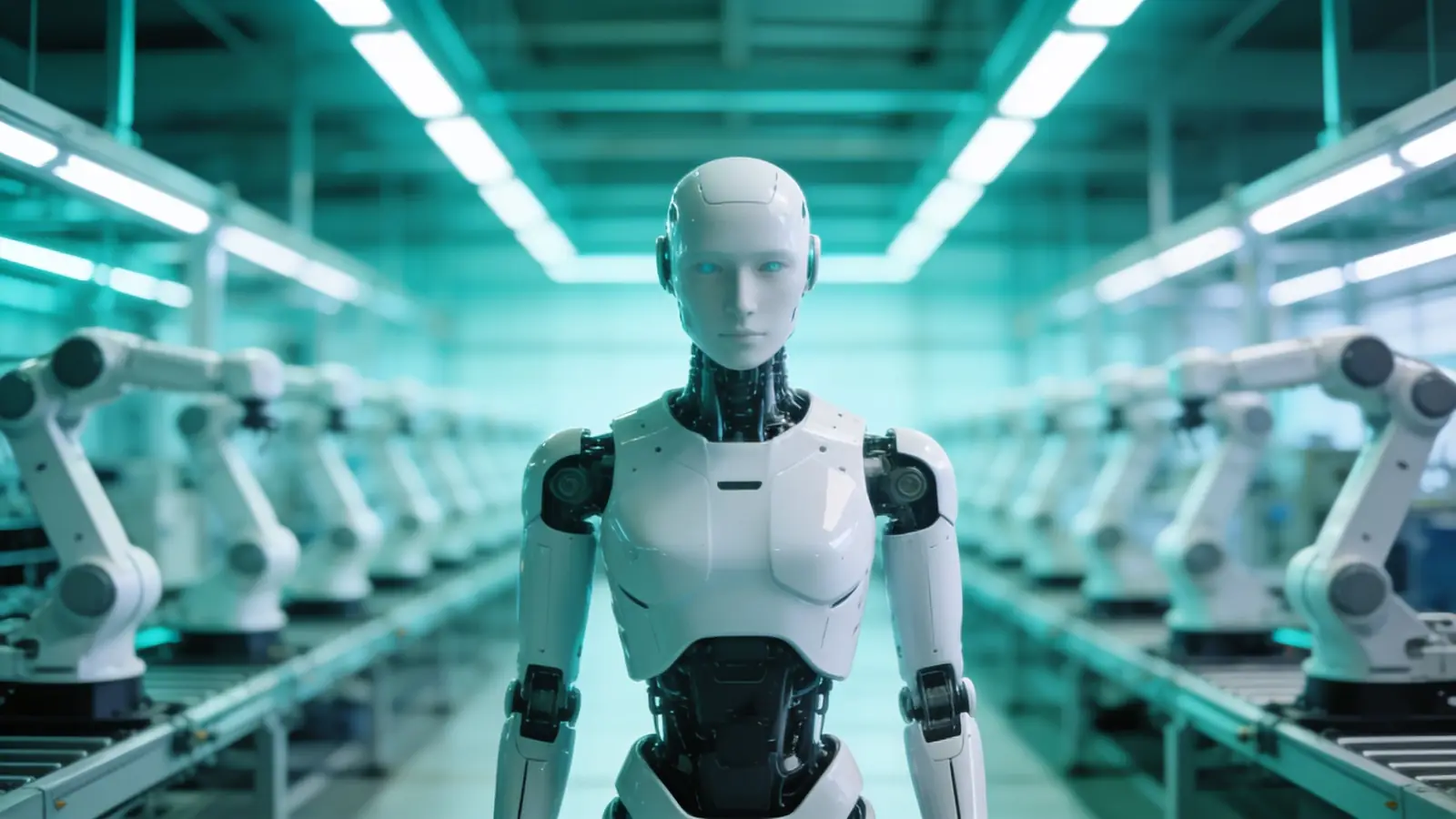
Illustration
Companies3 min read
XPeng to start mass production of IRON humanoid robot in January 2027
XPeng plans to start mass production of its IRON humanoid robot in January 2027, the Guangzhou-based company said on 25 November as it unveiled the robot at its AI Day 2026. In the first quarter of 2027, IRON is due to begin training as a store assistant in XPeng retail stores, according to the press release. The release gives no price and no market launch outside China.
Key facts
- XPENG unveiled IRON at its AI Day 2026 on 25 November 2026; hardware mass production is due to start in January 2027, the company says.
- XPENG says IRON has 76 degrees of freedom, over 1,500 tactile sensing points and three Turing chips with 2,250 TOPS; the line is designed to build one robot every 2.5 minutes.
- First deployment: store assistant in XPENG retail stores from Q1 2027; the release names no price and no European availability.
Researched and written with AI, to Luigi's brief, positions and editorial rules. Automatically checked against the sources. How I work →
All details come from XPENG Inc. (NYSE: XPEV, HKEX: 9868), which calls itself a “Physical AI company”. CEO He Xiaopeng said in the release that the industry must move beyond demonstrations and prove that robots create real-world value. Mass production is scheduled for January 2027 as the company prepares for commercial deployment. No independent confirmation was available at the time of writing.
Mass production and first deployment
Starting production is not the same as delivering to customers. The release refers to hardware mass production from January 2027 but gives no volumes, factory location or retail price.
At full capacity, the automated line is designed to complete one IRON every 2.5 minutes, the company says. The robot will begin in commercial roles with defined tasks: from Q1 2027 it is due to train as a store assistant in XPENG retail stores, handling customer reception and product guidance. XPENG says it wants to develop and validate its capabilities there before adding further roles.
For training, XPENG says it runs a 50,000 m² “Robot Data Factory” covering more than 250 scenarios and 15 job categories, using data-processing and evaluation tools from its car business.
Specs and safety
According to XPENG, the latest IRON has 76 degrees of freedom, including a 21-degree-of-freedom hand, more than 1,500 tactile sensing points, 3D vision and 360-degree perception. IRON OS runs on three in-house Turing AI chips with 2,250 TOPS of effective computing power. Tactile feedback lets the robot detect contact and adjust grip force.
The control stack follows a three-system architecture called Turing Physical AI (VLA 3.0). System 2 handles reasoning and planning; System 1, powered by the VLA 2.0 model, makes fast decisions about the environment. The release also lists five layers of physical safety, including collision detection, torque limits and emergency stop, plus redundant dual-channel communications and an independent fail-safe balance controller.
IRON is meant to navigate autonomously, take task lists by voice or app, recharge itself and report faults, with a target of round-the-clock availability. The release offers no evidence yet of how this performs in practice.
For related physical-AI coverage, see Tesla FSD v15 and its AI-generated view, Nvidia's halted server shipments under export rules and Deepmind's AI agents running experiments.
Analysis
The release is a roadmap, not proof. What is documented is the plan: production from January 2027, a throughput target and a first deployment in XPENG's own stores. Whether the robot advises customers reliably can only be judged after the first quarter of 2027. A company-owned store is a protected test space: the maker controls the floor, the tasks and the audience.
For marketing and operations teams in Germany, Austria and Switzerland, the choice of tasks matters most. Reception and product guidance can be briefed and measured, which fits the principle that what can be briefed and measured can be handed to machines (K06), while judgement, accountability and brand voice stay with people. Trust is the second point (K04): a company that puts a robot in front of customers should disclose that a machine is talking.
Price, volumes, factory location and availability in Europe remain open. Until those are known, planning around IRON is premature for businesses in the German-speaking region. The sensible step is to wait for results from the XPENG stores and for independent confirmation that series production has started.
Got AI news? Submit news →
FAQ
When does XPeng IRON mass production start?
According to XPENG, hardware mass production is scheduled to begin in January 2027. The first deployment as a store assistant in XPENG retail stores is planned for Q1 2027.
How much does XPeng IRON cost and is it available in Europe?
The 25 November 2026 press release names neither a price nor availability in Europe. Neither is documented so far.
Source
More sources
- Humanoids Daily – Unabhängiger Bericht vom AI Day vor Ort: bestätigt Produktionsstart Januar 2027, Taktzeit 2,5 Minuten je Roboter, Einsatz in XPENG-Läden ab Q1 2027 und Marktstart Q2 2027.

 DealBlack Friday 2026: 14 AI tool deals checked, ElevenLabs leads
 NewsMeta's Muse handles 51% of agentic orders as Amazon weighs access
 NewsOpenAI fixes GPT-6.2 billing error: Astra limits hit 40% faster